
The material
Gypsum board.
Changed by fire.
Understanding calcination starts with the material—and with careful observation of the scene.
What is calcination?
A change within
the gypsum.
When gypsum is heated, it loses water held within the material, including chemically bound water. This heat-induced change is known as calcination.
CalciTrace focuses on measuring calcination depth in fire-exposed gypsum board and relating the readings to observations from the fire scene.
Terminology: NIST / OSAC Lexicon — Calcination of Gypsum ↗
A real fire scene
Different surfaces.
One wall.
The photograph shows the area of origin identified in this case, together with three different surface conditions on the gypsum board.
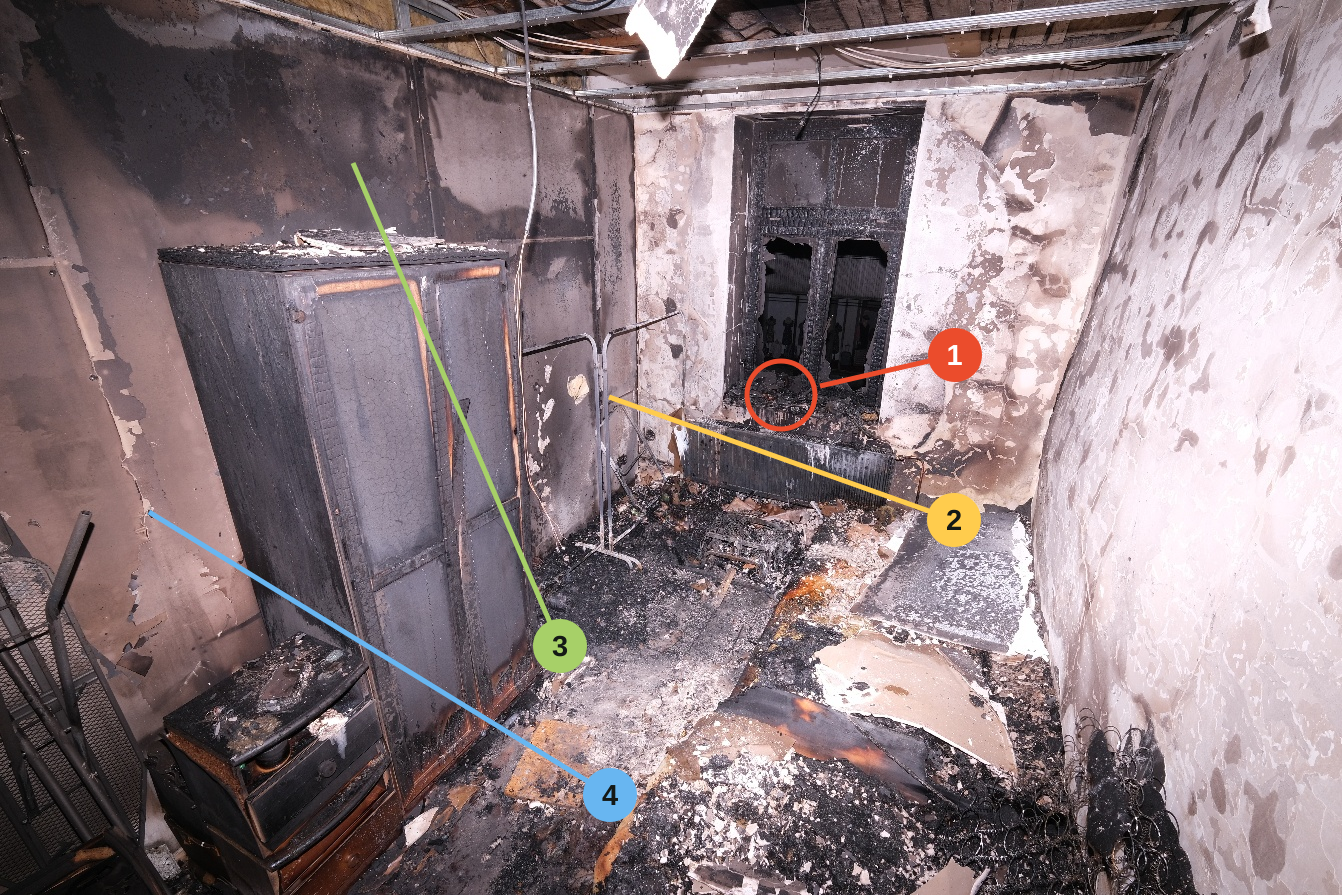
- 1
Area of origin
The location identified during the investigation of this fire.
- 2
White burn areas near the area of origin
Light-coloured, fire-exposed areas visible on the gypsum board surface.
- 3
Blackened and partially damaged gypsum board surface
A darker part of the wall with visible surface damage.
- 4
Intact paper facing
An area where the paper facing remains visible.